

Fashion is a multidisciplinary field that encompasses elements of art, culture, sociology, psychology, and technology (Granata, 2016). As both an industry and a system of communication, fashion involves the systematic production of clothing and accessories through structured design processes guided by theoretical frameworks and cultural values (Kawamura, 2005). This system includes various actors and evolves within diverse social and cultural contexts. Today, the industry is increasingly shifting toward values such as equality, inclusion, sustainability, and decolonization (Black, 2012; Niessen et al., 2017).
Fashion designers, as creative agents within this system, go beyond creating garments; they engage in the interplay of artistic expression, cultural interpretation, and social commentary. In order to thrive and maintain influence in this dynamic field, designers must navigate and accumulate various forms of power.

Image licensed via Adobe Stock (Education License – Standard Image).
Power Dynamics
Pierre Bourdieu (1986) conceptualized power through the notion of capital, understood as resources or assets convertible into social advantage. He identifies three main forms: economic, cultural, and social capital. Economic capital relates to financial assets and property rights. Cultural capital includes embodied traits such as knowledge, education, and tastes, as well as objectified cultural products like artworks or design archives. Social capital consists of networks, relationships, and affiliations that offer support and access to opportunities (Bourdieu, 1986).
In the fashion industry, these capitals are deeply interwoven. A designer with a rich store of cultural capital, such as advanced education, art historical awareness, or refined aesthetic judgment, can create compelling and innovative work that attracts both critical acclaim and commercial success (Entwistle, 2000). For example, Dries Van Noten, known for his intellectual references and deep engagement with global textile traditions, has built a career grounded in cultural capital (English, 2013). His collections often feature antique-inspired prints, hand embroidery, and global narratives, demonstrating the value of education, cultural fluency, and historical awareness.
Economic capital allows designers to access high-quality materials, hire skilled labour, invest in sustainable technologies, and participate in prestigious industry events like fashion weeks. For instance, Tom Ford’s rise at Gucci was accelerated by the financial resources that enabled bold reinvention and large-scale production, which would have been impossible without substantial economic backing (Moeran, 2006).
Social capital is equally vital. Designers with strong networks, including connections to stylists, editors, influencers, and retailers, gain media exposure and commercial opportunities. Virgil Abloh, for example, leveraged his connections within the music and streetwear scenes to elevate Off-White and eventually take the helm at Louis Vuitton menswear (Rocamora, 2022). His social capital facilitated a rapid and transformative influence across high fashion and street culture.
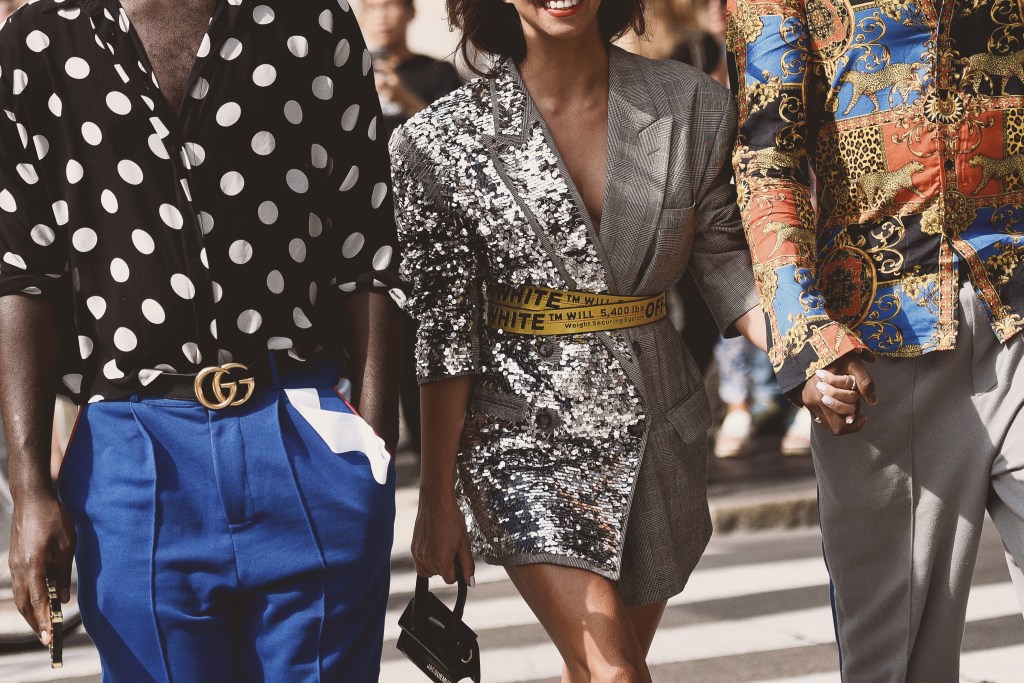
September 22, 2018: Milan, Italy – Street style outfits in detail during Milan Fashion Week – MFWSS19
Editorial Use Only. Image licensed via Adobe Stock (Education License – Standard Image).
Credit: agcreativelab – stock.adobe.com.
Cultural Capital and the Habitus
Bourdieu also introduces the concept of habitus, defined as the system of dispositions, tastes, and embodied knowledge that individuals acquire through life experiences and social conditioning (Bourdieu, 1990). In fashion, habitus shapes a designer’s aesthetic sensibility, design process, and brand ethos.
A designer’s habitus is revealed through recurring themes in their collections, material choices, and cultural references. For example, Rei Kawakubo of Comme des Garçons expresses a habitus shaped by post-war Japanese avant-gardism and anti-fashion aesthetics, which results in her deconstructed silhouettes and sombre colour palettes (Evans, 2003). Similarly, Grace Wales Bonner, whose background combines Caribbean and British heritage, channels her dual identity into her collections by merging European tailoring with Afro-Atlantic cultural references, resulting in a nuanced and hybrid habitus (Adeyemi, 2020).
Luxury brands such as Hermès express their habitus through craftsmanship, heritage storytelling, and exclusivity. Fast fashion brands like Zara operate with a habitus focused on trend acceleration, accessibility, and consumer responsiveness (Tokatli, 2008). These distinctions shape brand strategies and consumer expectations.
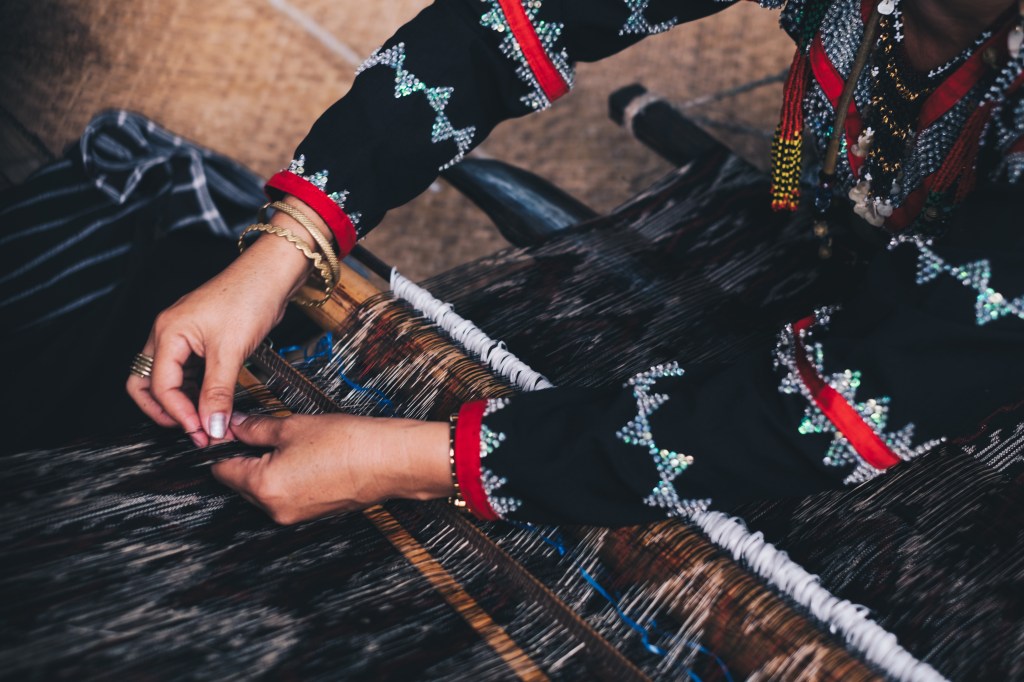
Image licensed via Adobe Stock (Education License – Standard Image).
The Future of Power in Fashion
Efforts toward inclusion, sustainability, and decolonization are reshaping power structures in the fashion system. By promoting diverse narratives and ethical practices, designers expand their cultural and social capital and shift industry values (Tarlo & Moors, 2013).
Telfar Clemens, a Liberian-American designer, exemplifies how cultural capital can be expanded through inclusive values and accessible design. His “Not for You, for Everyone” slogan speaks directly to his brand’s commitment to representation and equity. The popularity of the Telfar shopping bag, often dubbed the “Bushwick Birkin,” demonstrates how embracing marginalized identities can become a powerful cultural and commercial force (Phu & Skivens, 2021).
Sustainability is another pathway to recalibrate fashion’s capital structure. Designers like Stella McCartney have long championed cruelty-free and eco-conscious fashion. Her avoidance of leather, investment in innovative textiles, and promotion of slow fashion practices have strengthened her brand’s cultural capital as consumer awareness about environmental degradation grows (Black, 2012).
Decolonization in fashion challenges Eurocentric canons and privileges multiple cultural epistemologies. Brands like Brother Vellies, founded by Aurora James, work directly with African artisans and advocate for equity in the global fashion supply chain. James’s 15 Percent Pledge, which calls for major retailers to dedicate 15 percent of shelf space to Black-owned businesses, exemplifies how designers can use their social and cultural capital for systemic change (James, 2021).
Decentralization also entails the diversification of fashion capitals, rejecting the dominance of Paris, Milan, London, and New York in favour of local fashion scenes, digital platforms, and alternative timelines. Events like Lagos Fashion Week or Tokyo Fashion Week showcase vibrant, non-Western fashion cultures that are redefining global style narratives (Niessen et al., 2017).
Finally, the fashion system must account for intersectionality. Collaboration between designers of diverse racial, gendered, and class backgrounds can foster innovation and address issues of representation. Brands like Gypsy Sport, led by Rio Uribe, and Pyer Moss, by Kerby Jean-Raymond, challenge conventional beauty standards while celebrating cultural heritage and queer identities (Crenshaw, 1991; Rocamora, 2022).
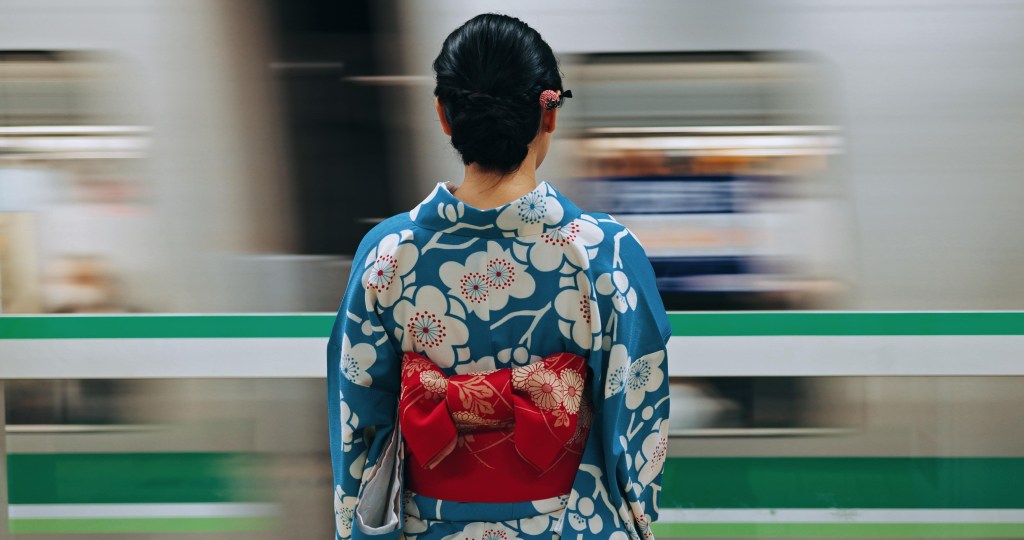
Japan woman, travel and train station in kimono and public transportation on metro bullet in city. Person, motion blur or traditional clothes by fast vehicle or subway in tokyo on urban adventure.
Image licensed via Adobe Stock (Education License – Standard Image).
Conclusion
In sum, fashion operates through a complex web of capital and habitus. Designers and other actors bring their distinct social positioning, networks, and cultural assets into the field, shaping both their creative output and industry impact. Today, as the fashion world becomes more attentive to equity, sustainability, and decolonial thought, power is being reconfigured in generative ways. Fashion designers who embrace these values not only push the discipline forward but also position themselves as ethical leaders in a more just and inclusive future.
Work Cited
Adeyemi, K. (2020). Grace Wales Bonner and the politics of hybrid aesthetics. Fashion Theory, 24(3), 331–349.
Black, S. (2012). The sustainable fashion handbook. Thames & Hudson.
Bourdieu, P. (1986). The forms of capital. In J. Richardson (Ed.), Handbook of theory and research for the sociology of education (pp. 241–258). Greenwood.
Bourdieu, P. (1990). The logic of practice (R. Nice, Trans.). Stanford University Press.
Craik, J. (2009). Fashion: The key concepts. Berg.
Crenshaw, K. (1991). Mapping the margins: Intersectionality, identity politics, and violence against women of colour. Stanford Law Review, 43(6), 1241–1299.
English, B. (2013). A cultural history of fashion in the 20th and 21st centuries: From catwalk to sidewalk (2nd ed.). Bloomsbury.
Entwistle, J. (2000). The fashioned body: Fashion, dress and modern social theory. Polity.
Evans, C. (2003). Fashion at the edge: Spectacle, modernity and deathliness. Yale University Press.
Fletcher, K., & Tham, M. (2015). Routledge handbook of sustainability and fashion. Routledge.
Granata, F. (2016). Fashioning masculinities: Identity, art and fashion. Bloomsbury Academic.
James, A. (2021). The 15 percent pledge. https://www.15percentpledge.org
Kawamura, Y. (2005). Fashion-ology: An introduction to fashion studies. Berg.
Moeran, B. (2006). More than just a fashion magazine. Current Sociology, 54(5), 725–744.
Niessen, S., Leshkowich, A., & Jones, C. (Eds.). (2017). Re-orienting fashion: The globalization of Asian dress. Berg.
Phu, T., & Skivens, R. (2021). Decolonizing fashion: Reclaiming African aesthetics and futures. In S. Black (Ed.), Fashion design for living (pp. 83–97). Intellect Books.
Rocamora, A. (2022). The rise of streetwear: Fashion, style and global cultures. Bloomsbury Academic.
Tarlo, E., & Moors, A. (2013). Islamic fashion and anti-fashion: New perspectives from Europe and North America. Bloomsbury Academic.
Tokatli, N. (2008). Global sourcing: Insights from the global clothing industry—the case of Zara, a fast fashion retailer. Journal of Economic Geography, 8(1), 21–38.
Image References (Adobe Stock)
Adobe Stock. (n.d.). Beautiful young attractive fashionable model portrait with traditional ornament on skin and face[Stock photo]. Adobe. https://stock.adobe.com/images/233501147
Adobe Stock. (n.d.). Indigenous woman, aka Dreamweaver, from the south of the Philippines manually weaving the original and naturally dyed T’nalak cloth [Stock photo]. Adobe. https://stock.adobe.com/images/862385829
Adobe Stock. (n.d.). Japan woman travel and train station in kimono and public transportation on metro bullet in city[Stock photo]. Adobe. https://stock.adobe.com/images/706838963
agcreativelab. (2018). September 22, 2018: Milan, Italy – Street style outfits in detail during Milan Fashion Week – MFWSS19 [Editorial stock photo]. Adobe. https://stock.adobe.com/images/309181797
 niloufarashournia.com